The Deconstruction w/Piero Procaccini – session 5 . . .

    Session 5:

Running (Callbacks, Tangential information, Momentum, Memory)

Notes from Piero are in CAPS.

Memory-based. Any information you want to use this is the moment to use it. Normally anything goes in a run except new invention of material. Is something new is invented it must be followed up on. Momentum versus content becomes the most important element in a run.

Techniques to push momentum – energy of the scene should vary, recognize the distinction between scene energy and the run’s energy, and the use of edits.

Types of edits at use – ***TAGOUTS AND WALKONS ARE NOT ACTUALLY EDITS. EDITS, TAGOUTS AND WALKONS ARE BASICALLY THE THREE DIFFERENT INTENTIONS BEHIND A PLAYER WALKING ONSTAGE.

Edit – This edit changes the time, space, characters.

Tag-out – This edit changes the time and space, but the person that remained on stage from the last scene is still the same character.

Walk-ons – This edit changes nothing between the two people on stage but may add more to the space that already exists in the scene being entered.
SCENE PAINTING AND MOVIE TECHNIQUE ARE BOTH DEVICES THAT OFTEN SERVE TO INCREASE THE MOMENTUM OF A PIECE.

Scene Painting – Environment through description. This technique is different from narrative because it doesn’t make assumptions onto the scene but just provides technical information without bias. Is used to transition from one scene to another, involves the whole group jumping in fast, the person on stage should only describe one or at most two things. Think to add one piece of info and someone should be editing. (YES, IN SCENE PAINTING – AND AS I MENTIONED, I’M BEING REALLY PICKY HERE – I PERSONALLY PREFER TO FOCUS ON SHOWING INSTEAD OF TELLING. I THINK WE GET MORE OUT OF DESCRIBING A SCENE PREGNANT WITH MEANING INSTEAD OF NARRATING WHAT DEFINITELY HAPPENED. AS AN EXAMPLE, “ON THE FLOOR OF THIS HOTEL ROOM, WE SEE A TRAIL OF CLOTHING, LEADING TO THE BED, BY THE DOOR IS A MEN’S SPORTSCOAT AND A WOMAN’S BLOUSE, THEN A SHIRT AND TIE, THEN A SKIRT, THEN PANTS, AS WE APPROACH THE BED WE SEE A WHITE LACEY BRA AND PANTIES AND A PAIR OF BOXER BRIEFS. UNDER THE COVERS, WE MAKE OUT THE FORM OF TWO BODIES IN AN EMBRACE.” TO ME THIS IS MORE POWERFUL THAN “WE SEE A HOTEL ROOM WHERE TWO PEOPLE HAVE JUST HAD SEX.” IN NARRATING YOU ARE AN OMNISCIENT FORCE THAT IS GIVING INFORMATION WE MUST TAKE ON FAITH. IN SCENE PAINTING, YOU ARE DESCRIBING ONLY WHAT A VIEWER MIGHT OBSERVE ON THEIR OWN AND YOU ARE ALLOWING THEM TO COME TO THEIR OWN CONCLUSIONS. BOTH ARE FINE, BUT I FEEL THAT SCENE PAINTING IS MORE SOPHISTICATED AND INTERESTING FOR AN AUDIENCE. HOPE THAT MAKES SENSE.)

Movie Technique – This should be of things that you cannot see but can only portray through description (camera shots), “You pull back and see . . .” again a group activity. If a character is being followed the character is still on stage miming the description being given.
Transformational – This is more symbolic in description. E.g., “you see a record spinning on a record playing, as it spins it turns into the wheel of a bus.”

Exercise –

YEP, ANYTHING YOU MIGHT OBSERVE DONE IN A MOVIE IS FAIR GAME IN MOVIE TECHNIQUE: CROSSFADES, SMASH CUTS, TRANSFORMATION, ETC.

Edits, tag-outs, and walk-ons.

Edits, tag-outs, and walk-ons with only eye contact and audio cues. To whom you make eye contact is the person that you are doing a scene with. Start the scene from the sides by initiating dialogue.
Scene painting and movie technique. (YES, WE CAN DISTINGUISH BETWEEN EDITS, TAGOUTS AND WALK ONS THROUGH THE USE OF EYE CONTACT. IF WE GET GOOD AT THIS, IT ADDS A REAL FINESSE TO OUR SHOW.)
The Deconstruction w/Piero Procaccini – session 4 . . .

    Session 4:

Commentary Scenes (Premise-based scenes, Gameplay, Mapping, Frustrating Wants)

Note from Piero are in CAPS

Things at work in commentary scenes-

– Premise-based
– Behavior critical to theme
– Mapping
– Agree to deny
– Game-based

Like external and internal characteristics there are internal and external minds at work within one individual.

The internal mind is responsible for the thoughts we have as the character.
The external mind is the improvisers minds. The puppet and the puppet master.

Exercise –
Two person scene with four characters – something in the scene will frustrate one person, both people will escalate the frustration and then a 3rd person (played by one of the two people already in the scene) will appear and raise the frustration level and so will a fourth.
A matching energy will helps the characters doing the frustrating and for the person being frustrated an opposing energy will help.

There is an initiator and a responder. The initiator instigates a scene start with providing to the responder how they will react to the information that you are going to present. Responder will just react to the information that you give them and nothing more until they understand their role and then they can heighten.
Let the responder know what you need from them from your first line of dialogue.
A dance normally occurs with the initiator instigating a reaction and then pacifying the reaction.
The responder’s job is not to “and” until they understand what they need to do and then they help to heighten.

Mapping – putting one set of internal reactions onto the most inappropriate place.
This is the portion that requires the most thought.

YES, THE COMMENTARY SCENES ARE A CHANCE TO HIGHLIGHT BEHAVIOR THAT IS CRITICAL TO THE THEME OF THE PIECE. WE HIGHLIGHT THIS BEHAVIOR BY PLACING IT WHERE IT DOESN’T BELONG (I.E. WHERE IT WILL STAND OUT AS ODD). IT IS IMPORTANT TO NOTE THAT, IN CHOOSING, WHAT SCENE TO MAP TO, THE BEHAVIOR, ITSELF, SHOULD STRIKE US AS ODD GIVEN THE CIRCUMSTANCES – IT IS NOT JUST A MATTER OF FINDING A SILLY SCENE.

The Deconstruction w/Piero Procaccini – session 3 . . .

    Session 3:

Thematic Scenes (Agreement and Heightening, Matching, Non-Premise Scenes, Yes And)

Notes from Piero are in CAPS.

Player one and player two normally have equal status.
Build one line at a time, get rid of premise, player 1 and 2 play equal roles (no status difference)

Of note – you can’t communicate your theme to another player but the theme can influence your own actions. So the theme is a behavior springboard for thematic scenes and inspires your actions and your actions only. These are “Yes And . . .” scenes. Theme is meant to influence your own choices (e.g., if the theme is familial love, think “makes me feel . . . “ and then use those feelings and let them influence your choices. Thematic scenes are normally internally influenced.

They are characterized by being – “yes, and . . . “ scenes and build one line at a time. There is no pre-planning done here. These are not premise scenes where one person is trying to push their own ideas on to another person. You agree and you add, the additions should heighten.

These type of scenes are inspired versus tied to any agenda.

Exercises –
Yes scenes
Yes, and scenes
Match emotion scenes
Absurd reality scenes – what will exist if this one absurd thing is true. Look to explore absurd reality and the repercussions of this world if this reality was true. (RIGHT, BOTH THEMATIC SCENES AND COMMENTARY SCENES MIGHT FIND THEMSELVES IN ABSURD REALITIES – THOUGH, IN THE THEMATIC SCENES, IT IS ABSOLUTELY FINE IF THEY DON’T – THE DIFFERENCE IS THAT IN THEMATIC SCENES, ALL PLAYERS AGREE TO THE ABSURD REALITY AND EXPLORE WHAT REPERCUSSIONS IT WOULD HAVE. IN THE COMMENTARY SCENES, USUALLY ONE PLAYER ACTS AS A STRAIGHT PERSON TO THE ABSURD REALITY AND CALLS IT OUT.)

Relinquish control in a scene by playing the scene and not a pre-conceived idea. Focus on your emotional response and reacting based on your point of view.

YEP, LISTEN AND RESPOND. ONE LINE AT A TIME AND BE INSPIRED BY THE THEME YOU CHOSE.

The Deconstruction w/Piero Procaccini – session 2 . . .

    Session 2:

Source Scenes (Playing it real, Infusing scenes with as much information as possible, Categories of information, Playing longer scenes)

Notes from Piero are in CAPS.

The job of the two people in the source scene is to provide as much information as possible and remaining honest to the world created. This scene should be “serious,” which means grounded and as true to life as possible.
One is welcome to adopt a character if the character does not impede the performer (i.e., the performer is worried about aspects of playing that character versus being that character and portraying them as a real person.)
These scenes should feel like they are real scenes with real people in real relationships. Things that will help are slow scene starts and keeping them grounded.

Tools and information provided in Source scenes:
– time
– name
– specificity
– state of being
– emotion
– why they feel the emotion
– music/rhythm
– what your function is, modus operandi
– perspective or point of view
– anecdotal information (tell a story)
– temporal information (past, present, and future)

Information we have as a character, both of the below are needed in scenes, if either are lacking the scenes are incomplete:
– Internal information
Feelings
emotions
– External information – outside information
Overall
General

Exercise –
1) Mapping – (putting one set of internal circumstances onto the external details of another scene. E.g., the internal state of a couple getting a divorce onto a scene where an ice-skating student is quitting and telling his coach.)
2) Vulnerability – allowing yourself to be vulnerable in a scene versus invulnerable and not putting vulnerable characteristics on another. Vulnerable person is usually the person we get information from. Focus on your vulnerability and when it is your scene partners, letting them be vulnerable as well.
3) Focus of information – Don’t ping pong, focus on one and then another. Spend the time to explore each when it lands there. Important for there to be information from both in these scenes.
You
Scene partner
Environment
4) Relating – Everything your scene partner says is something that you can relate to. Specificity helps make those statements true.

The Deconstruction w/Piero Procaccini – session 1 . . .

    Session 1:

Intro to the Deconstruction (Overview of structure and introduction to active listening/watching using thematic, commentary and tangential categories)

Notes from Piero are in CAPS.

History – Del Close invention, first group was the “Victim’s Family”, then it turned into the “Family.” Miles (STROTH) was an original member of the “Family” and is whom Piero learned this form from.
To Piero the Deconstruction is the ultimate game. Definition of a game is the idea that a group of people will communicate with an agreed upon set of rules. (NOT SURE IF THIS IS THE DEFINITION OF A GAME BUT IT IS OFTEN WHAT WE DO WHEN WE PLAY GAMES) In Deconstruction the game rules is the agreement to communicate through the type of scene work that they do. (RIGHT, WE ARE COMMUNICATING THE THEMES OF THE PIECE THROUGH OUR SCENEWORK.)

Jobs are broken up into on-stage job and off-stage job. On-stage job is to be in the scene and not to analyze. Off-stage job is to analyze and to actively listen. This is your time to think.

Active listening – watching, logging, and analyzing. Best way to do this is to physically portray active listening (leaning forward, eyes open, ears perked, or any way that one can best put oneself into that mind-frame physically.)
You can log information into two sub-sections:
– video camera (remember exact information – specifics and accurate information)
– categorical (this is dependent on the form, e.g., in a Harold you log information by character or in Close Quarters you log information by details.)

In the Deconstruction you log information in three categories:

Thematic information – What is the theme of this scene? What is this scene/piece about? Theme is based on the first source scene and should be summed up by an abstract (universal) phrase. One person’s theme does not have to be the same as another.

Commentative information – May be least apparent, this is the behavior that is critical to the theme of the piece. What pieces of information supplied in the scene/piece made you come to that theme?

Tangential information – This is not critical to the theme or commentary realized prior but is information/moments that stand out or are of note. It is everything else (i.e. details, specifics, info that stood out).

Exercises –

warm-up doing one-line, two-line, and three-line scenes with the idea that we’re supplying information.

Two-person scenes where off-stage participants look for theme, commentary, and tangential information.
First set was one theme, one commentary, and one tangential piece of information.
Second set was one theme, one commentary, and two tangential pieces of information.
Third set was one theme, two commentary, and three tangential pieces of information.

The Deconstruction w/Piero Procaccini – so it begins . . .

Here are my notes for posterity on the class that we took this weekend. Basically Piero fit into a two-day period a complete workshop series he normally does in 8 weeks. Suffice to say, these notes are extensive and broken into class period. I tried to put them all into this blog post, but it looked ridiculously daunting. As a side note, I was fortunate to have Piero also review my notes after I had transcribed them, so here you have my original notes with corrections and elaboration by the man himself (Piero’s notes are in CAPS.)

Hey Monica!

I went through and made a few comments in your notes – they are in all caps just to indicate where they are. Please let me know if anything is unclear or needs further explanation. Most important, though, I’d say, is for you to jot down any realizations that you had or lessons you came away with from the class – these are the things that will serve you best moving forward.

-Piero

The Deconstruction with Piero Procaccini

With a solid background in the Deconstruction, performers are equipped with a working paradigm to
more easily navigate through their scène work.

Format of The Deconstruction long-form (35-50 mins in length):

1. Source Scene – one scene (6-8 mins. long)
This scene is grounded and its purpose is to provide a lot of information

2. Thematic Scenes – two to three scenes (2-3 mins. each)
These scenes are not premise-based and its purpose TO HELP SOLIDIFY THE THEMES OF THE PIECE (THIS IS ACCOMPLISHED BY –> is to play it line by line, to agree and add information.)

3. Source Scene – return to source scene from point that you left off (2-3 mins. long)
This scene’s purpose is to play on the theme that is observed from thematic scenes. (YEP, RESPOND TO THE THEMATIC SCENES AND ALSO TO ACT AS A MARKER BETWEEN THE THEMATIC SCENES AND THE COMMENTARY SCENES)

4. Commentary Scenes – five to six scenes (1 min. each)
These scenes are premise based, they’re used to exhibit behaviors in non-traditional scene set-ups (place and circumstance). There is an initiator and a responder in each scene. Just yes (don’t add, only heighten).
(COMMENTARY SCENES ARE MEANT TO COMMENT ON THE THEME OF THE PIECE BY TAKING THE BEHAVIOR CRITICAL TO THE THEME AND PLACING IT WHERE IT DOES NOT BELONG. INITIATOR HAS THE PREMISE. FOR THE RESPONDER, JUST “YES”, DON’T “AND” UNTIL YOU UNDERSTAND THE PREMISE, AFTER THAT HEIGHTEN THE GAME AND GET OUT OF THERE.)

5. Source Scene – return to source scene from last point (1 min. long)
This scene is meant to serve a specific form function, it allows the rest of the performers to get ready for the run. Source scene will also build on commentary observed, but not meant to add new information. (ACTUALLY, THIS IS THE LAST PLACE THAT YOU COULD POTENTIALLY ADD NEW INFORMATION – NO NEW INFO IN THE RUN. DURING THIS RETURN TO THE SOURCE SCENE, SOURCE SCENE PLAYERS CAN RESPOND TO THE COMMENTARY SCENES AND OFFSTAGE PLAYERS CHECK IN ABOUT THE FACT THAT THEY ARE ABOUT TO RUN. IT ALSO SERVES AS A BENCHMARK BETWEEN THE COMMENTARY AND THE RUN.)

6. Run (Running) – As many scenes you can fit into a 6-8 minute period.
(scenes shouldn’t last longer than 30 secs.)
These are meant to use up the extra information (ANY INFORMATION AT ALL FROM THE ENTIRE PIECE – IF YOU THOUGHT OF IT/REMEMBER IT FROM THE PIECE, USE IT HERE)we obtained from the original source scene. It starts with a short scene and picks up momentum throughout. It is the final sprint to the finish line.

7. Source Scene – return to source (brief revisit – tech cue)
This scene is meant to serve a specific functions also, it is the button to the end and the cue that this is the end of the show, i.e, the tech cue. (YES, IT’S ONE LAST CHANCE FOR US TO REVISIT THE SOURCE SCENE. IT TIES THE PIECE UP AND GIVES IT A SENSE OF CLOSURE.)

Laughtrack Theater Company “workshop intensives” breakdown – Larrance Fingerhut

    Rudiments of Musical Improv – Saturday April 3rd
    by Larrance Fingerhut

This class will guide the improviser in creating improvised songs. We will touch on proper vocal production and concentrate on emotional commitment, song structure, and rhyme.

BIOGRAPHY
LARRANCE FINGERHUT is a pianist and composer and has been improvising music since he was two years old. When he lived in Chicago he was music director for the music theater program at Columbia College and music director for Baby Wants Candy for six years and Second City touring company. He now resides in Maine with Jen Shepard where they own and operate ImprovAcadia in the summer and fall.

Notes for posterity:
Singing was the hardest part of this class, and yes, this class was all about singing. Larrance first explained that he was just going to give us a simple overview of what he was hoping to accomplish with us. He was hoping to have us create the emotional connection to the music that we need to create an improvised song. As the musician he is our stage partner; it behooves us to give him something to do and to allow him to play as well. He started off with having us doing some vocal warm-ups which included scales, then we went right into improvising a couple of lines on the Spring season. The exercises we did after were a two-person love duet, group song, and a three-person scene with involved each of us improvising a full song (more than one verse, chorus and possible bridge).
The two-person duet was to emphasis the idea of listening to each other, the music, and the concept of repetition – instead of having to keep coming up with new information we should fall back on what we’ve set up initially. “Repetition is your friend,” and “Every song is a love song,” ideas. We also touched on the bridge within a song concept. Bridges are used to stray from the “rose-tint” of the song situation and allow the internal doubt/insecurity of a possible alternate reality to surface. The changes in the music set the stage for this as an option.
The group song was by far the most complex. The theme involved disaster situations. It involved five people on stage. One person would step out and start to sing a couple of lines around the disaster suggestion, a second person would step out and give the chorus line then step back and the entire group would sing the chorus line, at that point the original person that sang the lines around the disaster suggestion would step forward and deliver a final rhyming line then step back and the group would sing the chorus line twice, at that point another person would come forward and sing two lines then step back, repeat chorus line twice, 2nd person that sang would step forward again, deliver a rhyming line to chorus then step back, and the chorus would sing the chorus line twice. (Formula 1-1-C-G-1-G-G – 2-2-G-G-2-G-G . . . until everyone has a chance to do a verse.)

    Example: So if the suggestion was Blizzard.

    Person 1: I am so cold and the world is unclear
    Person 1: I can’t see my hands and I can’t feel my ears

    Chorus Person: I’m going to die in the ice
    Whole Group: I’m going to die in the ice

    Person 1: Right now a fire would be nice

    Group: I’m going to die in the ice
    Group: I’m going to die in the ice

The last exercise that we did was a three-person scene, one person entered from off-stage after the scene started and ideally one person, if not both, has sung before then. Larrance would look for a strong statement (use of “I . . . “) and that became the beginning of the song. He wanted us to repeat the line that had initiated the song and make the song from that statement.

New exercise highlight:
Working with music is very complex. I really enjoyed the fact that we got to spend some time on this as a tool and it was very useful for someone that has had a cursory knowledge of how to work music into a show, but not a breakdown of the pieces and some quality time of listening to the music, hearing the changes within it, the meaning behind them, and how I can best utilize it.

Laughtrack Theater Company “workshop intensives” breakdown – Mike Kosinski

    Stop, Collaborate, and Listen – Saturday March 27th
    by Mike Kosinski

This workshop will emphasize the importance of ensemble work while striving to find a playful mindset in which we react and feel rather than think. Exercises and scene work focus on finding the “flow” in scenes that make shows feel effortless. Come to this workshop prepared to slow down your play, sharpen your focus, and utilize group mind to find the elements that make scenes, games, and shows work.

BIOGRAPHY

MIKE KOSINSKI has spent the last three years performing and teaching sketch and improv comedy with the Second City Theater aboard Norwegian Cruise Lines. Before taking to the sea, he trained in Chicago where he also performed at the i.O. Theater, The Annoyance Theater, ComedySportz Chicago, The Playground Theater, and as part of several independent groups. Mike has also traveled the country to provide improv and sketch entertainment for corporate events

Notes for posterity:
Mike had great energy! He made this class a lot of fun just by being very open and interested in working with us on the subject matter he introduced. For warm-ups we did a couple of quick rounds of group sound-scaping. Someone would start with a tone and people would add in with a different sound and together as a group we had to find a natural ending. We then passed around a sound and motion, letting it be inspired and exaggerated by what we got from the person who gave it to us versus trying to mimic exactly what the first person had done. At a certain point Mike would yell out to stop the passing of the movement and the person who had it would have to start a scene with the person that they were going to “give” the pulse to. After this, we then did a series of scenes inspired by a movement and sound to get out the wiggles.
The groups were then split into two, and each group went on stage and had to start with a defined movement (a recognizable physical interpretation of an activity) morph it into an undefined movement, exaggerate it, and then from that, create another defined movement (we did not have to follow as a group, each individual ended up with a different defined movement at the end). Following that we did group scenes of five to six people, that involved starting a two-person scene, reaching a group game moment (involving movement and sound – defined to undefined), and then re-entering the original two-person scene with a change inspired from the group scene previously.
We did a series of six-person scenes that involved pairing of two’s. Each scene pairing would have a normal two-person scene and the other four players would be background elements/people of these scenes. We rotated through the pairings with the “extra” people (not two main characters of the scene) inhabiting different additions to each scene depending on what they originally offered and/or their new positioning at that moment.
At the end, we created a beginning of a long-form in these five to six-person groups; we created openings inspired by sound-scaping, went into a two-person scene, and then a sound-scaping group scene, and a different two-person scene (unrelated to the first) with the “extra” people adding in as scene painting.

New exercise highlight:
I really liked the rotating of 3 two-person groupings on stage, with each pairing behaving as background “color.” Trying to find seamless ways of incorporating what we were doing into a new scene without it being related was really fun to play with and experience.

The Natural World is doomed – Thank you, technology

A lot has changed in the last 20 years. Some for the better, and some for the worst. Don’t get me wrong, I’m on the computer right now and I love having a smartphone, but maybe we should ease up a little, put on the brakes, and really think about what place technology should have in our lives versus the resources that got us here.

How many cellphones have you owned?

A series of thoughts that have been in my mind, and debated and shared with a few others, is this idea of going paperless equaling “going green.” How does that work when we need a computer or some other type of way of still acquiring the “paperless” information? Paper is one of the few materials that is still bio-degradable, electronics . . . ? I don’t envision a world where my computer becomes one with the earth and is used as compost to create an eco-system that we can be sustained from. Do you?

Nothing about a computer, cellphone, tv, e-book and countless other electronic items made to keep us technologically-savvy that also need batteries (that are highly toxic and everyone is told should be recycled versus thrown into the trash) is bio-degradable. Yet books may disappear from our shelves to be replaced by bright shiny objects that we just have to plug in to receive all the information that we ever thought we’d want. And it does have a cost.

How many monitors, tv or computer?

Who do you think sustains most of the production of paper in the world? Corporations. In order for a corporation to sustain the need for paper, they also need to make sure there are trees. They use this resource by chopping it down and planting more trees, so they’ll have more resources to keep supplying us with paper. Do we really want corporations to stop seeing trees as a resource that they should invest time and money into sustaining?

When paper is gone by way of technology so will our trees. What was a resource to companies will become a liability of land and we will lose the one good thing corporations are doing right now that benefits the earth and our eco-system. I don’t see them taking care of it, if it’s not a resource. Technology is impacting our paper supply and that isn’t a good thing. Read a book (not on a device) when you can, write a letter by hand, wrap a gift for a friend, try to do things that keep us connected to the world and ourselves before they get lost on-line.

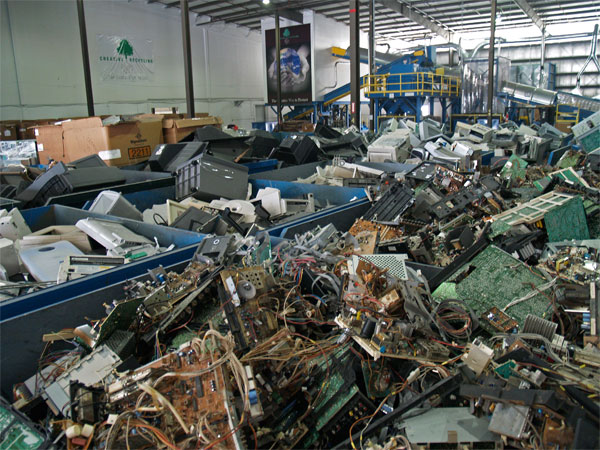
(This picture is actually taken from a recycling center for electronic items. They break them back down into their earth-friendly counterparts.)

Laughtrack Theater Company “workshop intensives” breakdown – Jennifer Shepard

    Stick To Your *&!% – Saturday March 20th
    by Jennifer Shepard

Many improvisers toss out and discard their first several initiations believing that the best is yet to be discovered or that the first idea can’t possibly be the best idea and in
doing so they give up their power.
Learn how to really listen to yourself and your scene partner in the first few moments of any scene. Learn how to declare and how to stick to that. Don’t throw you first
impulses, words, physical impulses away instead capitalize on them and let the scene grow from there.

BIOGRAPHY

JENNIFER SHEPARD is an actress and improviser with 24 years of experience. After graduating from the University of Iowa, she moved to Chicago to study improvisation. During her time in Chicago, she studied at iO, The Annoyance and the Playground theater. She worked and toured with the Chicago Comedy Theater performing at corporations and colleges through out the United States. After working in Chicago for a decade, Jennifer and her husband, Larrance, decided to open their own theater in Bar Harbor, ME called ImprovAcadia. They will open for their seventh season this coming May. She is currently working for The Second City Theatricals on a cruise ship in Hawaii. Jennifer has taught improvisation for the last eight years. Most recently she was asked for the third year to be a Visiting Adjunct Professor at the College of the Atlantic. She’s also taught for the Beth C. Wright Cancer Center, The Sea Coast Mission, the Town of Orono and by the Summer Festival of the Arts on Mount Desert Island.

Notes for posterity:
Jennifer’s class was very complementary to Deanna’s. In general, I have to say that this workshop series, as a whole, was well planned and thought out. The group of instructors really did a good job of tying their workshops together, so what we had learned in one would translate well to another. Jennifer taught very well, pushed us to stretch beyond our comfort zones, and was able to offer to us some advice on how we could better ourselves as performers. We did scene exercises that involved having an idea and figuring out how it would work with what we had set-up versus with what we think we should be doing. Being present was the number one priority in these exercises. We started with two person scenes and the other improvisers not on stage would offer us options of characters they don’t normally see us play. At the end of the class we did a series of two and three-person scenes that involved little slips of paper littered on stage with either, lines of dialogue or stage directions. These scenes were more free-form but involved trying to incorporate the things we had done in class, up to that point.

New Exercise highlight:
The first exercise we did involved our scene partner saying a line to us, we would respond with a line that we repeated three times (once to them, once to ourselves as the character, and a third time back to our scene partner). It was a little stilted because it felt abnormal but it gave us a lot of processing time. The object of the exercise was to say something, internalize it, and then make the reaction bigger through the delivery of the final line. This helped a lot because it forced you to slow down and feel something about what you were saying versus just saying it because it came to you.