Finding Strength in Vulnerability with Jonathan Pitts

Saturday, October 30, 2010 at Laughtrack Theater

Class Description: Improv vulnerability scares everyone. That’s why it’s easier to fake awkwardness in a cute, clumsy way than it is to be actually vulnerable on-stage with your scene partners. The key to improv vulnerability is to focus on first being open as an improviser and then let everything said or done onstage, by your scene partners or even yourself, have an effect on you. Then what appears as vulnerability becomes a super-sized strength, as the audience’s eyes follow your every move, as your characters become grounded and as your relationships become real. Through that reality of improv vulnerability, laughter always follows. The workshop process’ focus will be explored through the process of two and three person engaged in open ended scenes.

Instructor bio: Jonathan Pitts is the Executive Director of the Chicago Improv Festival Productions. He is also the Co-Founder of the prestigious Chicago Improv Festival. This is his 14th year producing the festival. He’s been involved in improvisational theatre for over 30 years.

He is also the creator/producer of the CIF’s All-State Improv Team; College Improv Tournament; Ridge Park Summer Theatre Camp; and Teen Comedy Fest, as well as CIF Production’s touring educational outreach programs, The Make ‘Em Ups; Storybox For Kids; Viola Spolin – Visionary Woman of Play; and World Tales.

He has improvised in over 1,100 shows with numerous ensembles in Chicago and across America, in everything from games to long-forms, and from scenes to experimental work. He was a member of Improv Olympic’s first ever house team, Stone Soup. As an actor, he’s appeared in over 30 plays and performance pieces with several Chicago area theatre companies. He’s also a former company member of The Blue Rider Theater.

Additionally, he’s also the creator/director of several theatre productions, as well as the improvisation theatre forms: The Oracle; The Silent Movie; and Storybox Theatre; as well as The Marty, a teaching exercise that he utilizes in his Whole Body Listening workshop.

As an improv teacher, for the past 13 years he’s been a guest artist at The Second City Training Center and he’s also a 3 year faculty member at Piven Theatre Workshop. Nationally, he’s taught in Albuquerque, Atlanta, Champaign, Chapel Hill, Honolulu, Kansas City, Los Angeles, Minneapolis, Philadelphia and San Francisco. Internationally, he’s taught in London for The Spontaneity Shop; and in Norway for Norsk Sceneskrekk.

For 7 years, he was the theatre/performance art curator of the Around the Coyote. For 3 years he produced the Director’s Festival for Bailiwick Theatre. While there, he also produced Naked I, a Chicago visual performance arts fest, and Art Attack, an arts festival in Michigan. Currently, he’s an Advisory Board Member of Director’s Lab Chicago and the Windy City Burlesque Festival. He’s also currently an Artistic Associate of Philadelphia’s Duo Fest and Austin’s Out of Bounds Comedy Festival. He’s a former Artistic Associate of Bailiwick Theatre and WNEP Theater.

He’s interviewed in three documentary films about improvisation: The Compass – America’s First Improv Theatre; The Delmonic Interviews; and Improv Legends. He’s a contributing writer to Anne Libera’s book, The Second City’s Almanac of Improvisation. He also wrote the forward to Asaf Ronan’s book On Directing Improv, and he was profiled in Tom Salinsky’s & Deborah Frances-White’s book The Improv Handbook, which was published in England and Europe. For 3 consecutive years he was selected by New City magazine as one of “Chicago’s Top 50 Theatre Players”.

Notes for Posterity:

First, let me start by saying that this class had me wiped out for the rest of the weekend. I’m serious. The class was centered around the idea of being open to the energy around you and the energy of the people around you, too. It was very holistic and the energy of the whole is integral to the group dynamic.

Pitts began with talking about Del Close and that Pitt’s always thought of him as his “improv father” but his “improv mother” was Martin deMaat. He cared about connections between people and the relationships and that was the center of how and what he taught.

This class was very different than most. We started off by warming up the parts of our bodies that we felt we needed to work on. Then we dove into exercises. We did three of them. All of them involved keeping your eyes closed and we did them in this order.

1) Two people at opposite sides, facing each other. When we were told to start we would walk toward each other with our eyes closed. At the point we felt the other person’s energy we then stopped.

2) Three  people in a line would walk towards the wall. They must start and stop as a group.

3) Two person scenes with your eyes closed. Both people remain seated and must do the scene while their eyes remain closed.

In general, I think Pitts left a lot of us with quotable nuggets. Here are my favorites:

  • Vulnerability is a product of being open.
  • Being open is a choice by you and it’s not something someone else can do for you.
  • Give a gift, not an entire Christmas.

Side note:
I did want to add one thing about the idea of group mind. I come from a theatre background, so I’m used to coming into a show and working on it as a group. There are no misconceptions about what we’re doing and I think that (out of all the things about theatre and improv) this is the most translatable. When you come into a group, I don’t think you should worry about having “group mind” with those around you but having a group purpose that you are all working toward. As a coach, creating a common language can help that, but as a player, just understanding why everyone is there in the first place, with this group of people, working on this form, may help lessen the drama (if you have any). We’re here to have fun and enjoy the process of creating something from nothing, right?

Windows has a new (?) blogging tool

I just checked this out on my Windows 7 laptop, it’s called Windows Live Writer. I don’t know how user-friendly it is yet, but I think it’s interesting in concept and so far I’m impressed. I can post to different blogging sites like WordPress and Blogger (among others). So far the test has been fun and interesting. Here is the screen print out of what I’m looking at right now. (I just did a shortcut to print screen and pressed ctrl+v (paste) to add it to the page.) Awesome! I was even able to change the size in the document itself.

image

Happy 2011 Everyone.

To start the new year off right, I just want to make sure I post at least once in January 2011. I don’t quite know what I’d like to talk about yet, but I would like to share some of the interesting things that I liked of 2010.

Streaming online football games and tv series that I missed or cannot watch on regular tv. Without the worry of DVR setting and space limits, the world of on-line watching has become an amazing landscape. This past year I was able to watch a football game I couldn’t get on tv, streamed in spanish and later in italian. (The world of cross-cultures collide in very interesting and educational ways sometimes.)

A zombie tv series. Things you’d never expect, only happen in a world that’s constantly evolving, or like in the series, devolving.

Reconnecting with family. I am not someone that has a close relationship with any of my relatives but I do think it’s amazing what happens when you reconnect with family members that you haven’t seen for years (I do mean YEARS.). You remember the small little children that you had to babysit or the elders that you wouldn’t dream of speaking to because it never even crossed your mind to have a conversation with them and you were too busy running around without any supervision because the kids watch over each other. Then you don’t see them for years and all of a sudden no one is a baby anymore, they have jobs, lives, significant others, and too many things going on, just like you. But they’re still family and you are in the unique circumstance of getting to know people that you’ve known your whole life for the first time. How exciting and terrifying is that?

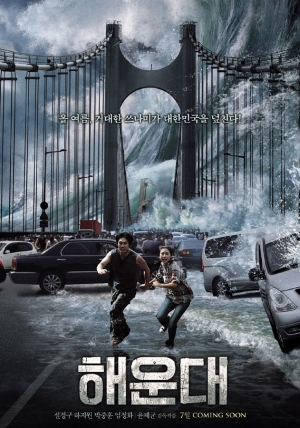
Tidal Wave (해운대 Haeundae) – South Korea’s “first disaster film”

My husband and I saw this movie a couple of days ago. We’re still thinking about it.  It was fun, exciting and so well done. One of the things that I don’t like about a lot of American disaster movies is that I normally don’t care about the main characters, the secondary characters or even tertiary, it is normally all about the action and that more than suffices because that’s what it is. This show actually managed to make me care about all the characters that were being affected by the natural disaster in their midst. If you have time or a netflix account, you might want to check it out. The action was good but the characters were better.

30th Annual Hawaii International Film Festival – October 14-24, 2010 (Our picks!)

Woohoo, the HIFF (Hawaii International Film Festival) starts tomorrow and my husband and I are going to attempt to watch eight of the shows this year. Here are the movies that we got tickets to see this year and why it was on our list.

I must warn you though, I’ve been told my taste in movies is not “normal” for a girl.


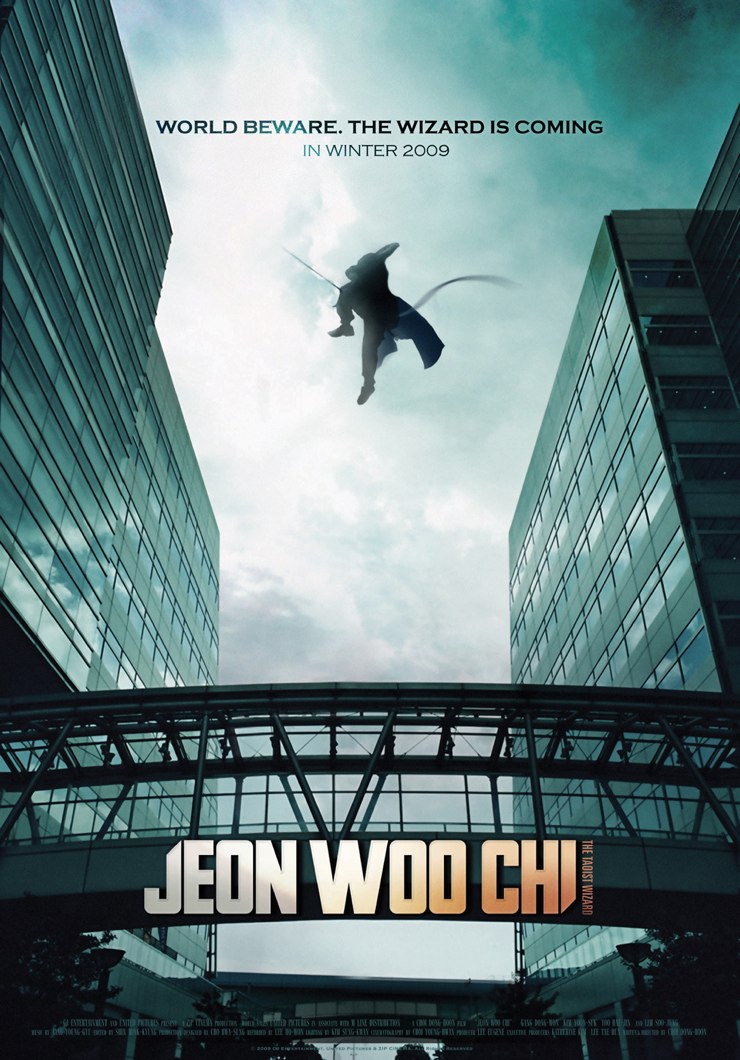
Thursday, October 14 at 6:00 p.m. – Woochi
HIFF link

Synopsis – JEON WOOCHI: THE TAOIST WIZARD involves an undisciplined, talented Taoist trickster, Woochi, who has been derailed from his search for the implements that will make him the most powerful wizard, ever.

Centuries ago some bumbling demigods erred in their attempt to secure the world from goblins. Now, in a plot that spans pre-modern times into a contemporary Korea, Woochi and his sidekick, a charmed dog-man named Chorangyi, must make their way against formidable wizards and shape-shifting demons in a coerced attempt to save the world. With WOOCHI, Choi has brilliantly executed a breathless action plot that still finds time for coy asides and smart humor– a must-see for all adult ages.
Synopsis written by: Bianca Isaki

Why: I’ve always been a fan of foreign films. I would go through phases of different genres and country foci. But my heart  and my husband’s heart have always held the asian action genre near and dear.


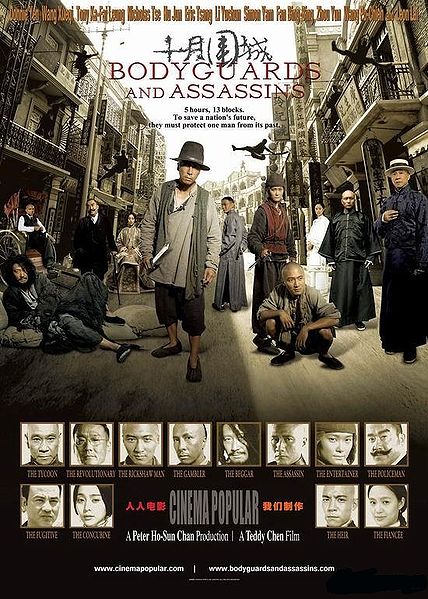
Saturday, October 16 at 9:00 p.m. – Bodyguards and Assassins
HIFF link

Synopsis – Set in turn-of-the-century Hong Kong, B&A is an old school, all star extravaganza the likes of which hasn’t been seen in decades. Nominated for more Hong Kong Film Awards than any other movie in history, it broke the bank in Hong Kong and busted the box office wide open in China.

The founder of modern day China, Dr. Sun Yat-sen, is coming to Hong Kong for a secret meeting but the Qing Empress wants his Republican head on a plate. The call goes out: volunteers are needed to protect Dr. Sun for the few hours he’s in town. Chances of survival: low. Crossbow battles, primitive IEDs, razor-sharp iron fans and a rain of death ninjas keep things moving as the unprepared bodyguards buy Dr. Sun safe passage across Hong Kong, a few feet at a time, paying for every inch of his journey with their blood.

Restricted to just a few city blocks, B&A is as epic as BEN HUR and as emotional as grand opera. It’s a movie about the men and women who sacrificed themselves for a cause they barely understood, giving their lives for a man they never met, dying for a future they’d never see.
Synopsis written by: New York Asian Film Festival

Why: “. . . old school, all-star extravaganza . . . ,” really, need we say more? (Yes we will!) We are fans of Donnie Yen and Leon Lai, both of which are in two films that we’re aware of in this festival. However the other Donnie Yen film is IP Man 2, a movie we’ve already seen, so naturally . . . .


Monday, October 18 at 6:00 p.m. – Clash
HIFF link

Synopsis – CLASH, starring Johhny Tri Nguyen and Veronica Ngo (the stars of THE REBEL) and directed by Le Thanh Son (who served as an assistant director on THE REBEL) is another reinvention of the Vietnamese action film. Ex-convicts Quan (Johnny Tri Nguyen) and Cang (Johnny Depp look-alike Lam Minh Thang) are part of a hit squad assembled by Trinh (Veronica Ngo) to steal a hard drive from French mobsters. Trinh works for an elusive criminal mastermind who seeks the hard drive to get control of Vietnam’s first and only satellite.

As the crew proceeds to execute the theft, a lone counter-operative from within the crew runs off with the hard drive. Quan reluctantly helps Trinh hunt down the traitor, but nothing is what it seems in this duplicitous world of crime and secret agendas. Director Le’s film represents a milestone in Vietnamese filmed entertainment, cross-pollinating the trends of the West with the sensibilities of the Vietnamese.
Synopsis written by: Anderson Le

Why: We can’t recall the last Vietnamese action movie we’ve seen . . . have we even seen one? This just might be a new treat for us.


Monday, October 18 at 10:15 p.m. – Machete Maidens Unleashed
HIFF link

Synopsis – Busty babes, mutated monsters and midget secret agents, the Filipino genre films of the 70s and 80s had it all. Saturating drive-ins around the world, the Philippines became a dreamland for exploitation filmmakers with cheap labour, exotic scenery and non-existent health and safety regulations.

The all-too-often overlooked world of Filipino exploitation flicks gets the Mark Hartley (NOT QUITE HOLLYWOOD) treatment in MACHETE MAIDENS UNLEASHED! Featuring interviews with filmmaking legends Roger Corman, Joe Dante, John Landis, Eddie Romero and a host of filmmakers, actors and critics, each with a story about a genre with no scruples, no scripts, no boundaries and – more often than not – no clothes.

Why: This may be the one documentary we watch during the Festival and what a fun one, not many of the others will be talking about midgets and mutants. Also our improv sensibilities would like to hear more on the; no scruples, no scripts, and no boundaries. Notice what we left out?


Wednesday, October 20 at 10:15 p.m. – Fire of Conscience
HIFF link

Synopsis – The investigation of a prostitute’s murder brings headstrong Detective Manfred (Leon Lai also in HIFF 2010’s BODYGUARDS AND ASSASSINS) in an unlikely collaboration with shady Inspector Kee (Richie Yen) from the Narcotics Bureau. When DNA of one of Manfred’s colleagues is found at the crime scene, Internal Affairs comes sniffing around. In the line of fire between high levels of corruption, Manfred must solve all the twists of the mystery, reluctantly with Kee. Together, the duo will wage a two-man war and uncover a conspiracy that will threaten to upend the entire police force, and paint the streets of Hong Kong with blood.

This explosive action thriller comes from the mind of action director Dante Lam, who struck action genre gold with his modern classic THE BEAST STALKER, shown at HIFF last year. FIRE OF CONSCIENCE is a tour-de-force that harkens to the golden age of Hong Kong action cinema of the early ‘90s.

Why: This is the second film we’re watching with Leon Lai in it, and a definite husband pick. We both have liked most of the films that we’ve seen him in and this one is also directed by Dante Lam. An action director that enjoys the action!


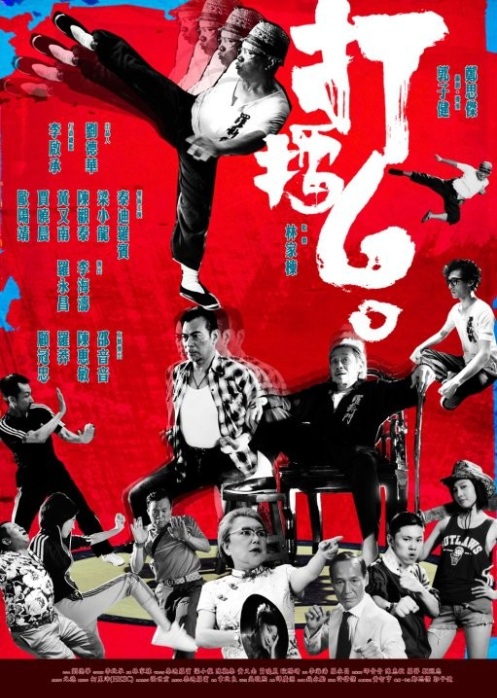
Friday, October 22 at 10:oo p.m. – Gallants
HIFF link

Synopsis – Martial arts fans will delight in this new kung fu comedy from writer/director duo Derek Kwok and Clement Cheng. As a punishment, incompetent office worker Cheung is sent to a rural village to settle a property dispute between some greedy property developers and the owners of a run-down teahouse. However, the teahouse turns out to be owned by Tiger (Bruce Leung Siu-Lung, KUNG FU HUSTLE) and Dragon (Chen Kuan Tai), two aging martial artists who are anxiously waiting for their master to awaken from a 30-year coma. When Master Law (Teddy Robin) suddenly awakens unaware that any time has passed, Tiger, Dragon and Cheung set out to revive the old martial arts studio.

Featuring a cast of old school kung fu stars from the heyday of martial arts films, GALLANTS sets out to prove that youthfulness is a state of mind. This film is truly an homage to the spirit of kung fu, one that values honor and wisdom and never backs away from a fight.
Synopsis written by: Anna Page

Why: We REALLY want to see this show. We think it’s awesome that the masters of this craft have gotten together for an epic event that is also made to entertain us. We have a lot of respect for them and believe that seeing their movie is one way to show deference.


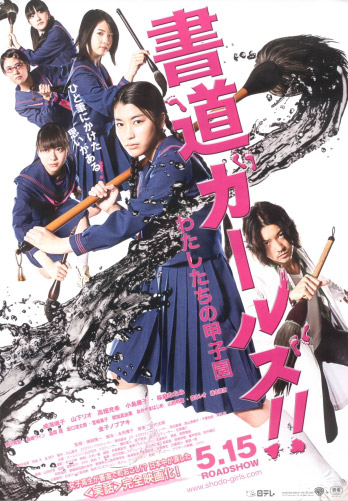
Saturday, October 23 at 2:15 p.m. – SHODO GIRLS!!
HIFF link

Synopsis – Meet the Shikokuchuo High School Calligraphy Club, a group of oddball students that take their calligraphy so seriously that they send new members fleeing down the halls at top speed. For the Calligraphy Club and their team captain Satoko (Riko Narumi, HOW TO BECOME MYSELF) calligraphy has become a joyless task requiring endless dedication. But when a new club advisor arrives on the scene and performs a strange demonstration to music, he forces the students to view calligraphy in a new and exciting way.

The film is set in Shikokuchuo city, the paper producing capital of Japan. Due to severe economic recession, the town’s local businesses are closing at an alarming rate. Inspired by their new advisor, the Calligraphy Club students set out to organize a competition that will revive both their spirits and the town.

Directed by Ryuichi Inomata, SHODO GIRLS!! is based on a popular televised event called “Shodo Performance Koshien” where groups of high school girls compete by performing traditional calligraphy on 10 meter sheets of paper, choreographed and set to music. SHODO GIRLS!! portrays how this unique competition has revitalized this traditional art form.
Synopsis written by: Anna Page

Why: Calligraphy is beautiful and we’re really interested in seeing how they make this a competitive sport.


Sunday, October 24 at 2:00 p.m. – The Butcher, The Chef, and The Swordsman aka Legend of the Kitchen Knife
HIFF link

Synopsis – This darkly inventive film follows the journey of a mystical blade as it passes through the hands of three ambitious men. As the interwoven story unfolds, they find that the blade possesses the power to dramatically change the fate of each of its owners.

The Butcher is a simple man in love with a beautiful courtesan, but is rebuffed each time he approaches her. The Chef is a handsome loner obsessed with seeking vengeance for the slaughter of his family. The Swordsman, the son of a legendary warrior, is consumed by the desire to eclipse his father in both power and fame.

Their stories comes full circle as each man takes possession of the mystical blade and discovers its double edge – the great power it bestows is matched by even greater danger. If you enjoy KUNG FU HUSTLE or SHAOLIN SOCCER, this film’s kinetic and zany energy will enthrall you.

Why: Quirky kung-fu show usually means tons of fun. Most of the time it also involves well done fight scenes and light humor.

So in closing, this is what we’ll be doing for the next two weeks. Wish us luck we just may be truly zombified by the end of it.

Roles versus Relationships in Improv Scenes

I’m beginning to think my personal improv mantra is, “make it interpersonal.”

I think there is a huge difference between your roles in a scene and the relationship that you have with the person that happens to be on stage with you.

Roles are established parameters of the two characters on stage (i.e. Lawyer and client, mother and daughter, father and son, teacher and student, and etc.). By definition, it is the proper or customary function. The position one holds to another.

The relationship is personal. It is the connection to the other person that necessitates an emotional response to a situation. To me that is the piece that when absent from the scene keeps it from moving forward. It typically shows itself as two people talking about the activity and not the way they actually feel about each other. (I.e. Lawyer and client speaking about the case, teacher and student speaking about schoolwork.)

However, I have to say some roles have interpersonal components that are built into them and, when combined, two roles at the same time can equal a relationship (i.e. Lawyer and client who are also brother and sister.)

Coaching Workshop by Jeff Griggs at Laughtrack Theater

On Saturday, August, 7, 2010, I had the pleasure of taking a coaching workshop taught by Jeff Griggs. It had a great deal of information, lots of pointers on how to format a coaching session and what a coach’s role is. I think as an improviser foremost, it’s nice to keep in mind what people are looking for and how it all comes together! These are my notes from the class.

Coaching Workshop with Jeff Griggs

-created brief bio for us to use during the first class.

Reasons the bio is important to have and to state in the beginning for the team:
As the coach it’s always a good idea to introduce yourself and give a background of who you are and why you are there. Letting the class in on what your perspective may be will benefit you in the long run.
It’s good for you and the people you’re coaching to know, but it’s also good for you to remember and remind yourself of.
(So be confident and relax, you have a perspective that is important. You are the expert and you are here to give them your perspective.)

Rehearsing – Teaching/Coaching:
Know what you are going to do before you go in. Have an agenda.

Warm-ups should be tailored for the exercises that you’ll be doing. You should be flexible and be able to change to fit the immediate needs but don’t count on your flexibility, come in with something to do.
Don’t come in with the idea that they’ll just do scenes – have a focus. Give them a direction and purpose. The group needs to know what they are doing and why they are doing it.

Plan your warm ups (for a 3hr class 20-30 mins/for a 2hr reh 10-15)
Warm ups get the group focused on what they’ll be doing for the next few hours and gets them ready to improvise.

Plan your exercises (majority of the class time). This is usually where the most time is spent and it is the main focus of the class or rehearsal. Where do you get exercises? Reuse and tryout what you like from classes you’ve taken and people you’ve been coached by or worked with. You can vary the exercises to fit but if you borrow an exercise it is good to give credit to the person that introduced it to you.
Repeat the exercises as needed. Create your own as necessary and utilize new ideas.

Before you go in finish this statement – “Today, my focus is on -fill in blank-.”
Everything you do should fit this statement. It’s better to over-plan, over-prepare, and not get to the end.

On average you’ll get through 4 exercises at most. Make the beginning exercises the most important because those are what you’ll want to make sure they do. Be prepared to have 30 minutes at the end.

Always emphasize focus of class. Over-plan and be prepared to do only a portion of what you planned.

Things to remember:
Remember why they’re there.
Everyone deserves your attention and training.
Try not to get mad.
You can’t treat everyone the same. Talk to them differently because they are different.
Don’t talk too much. Stories do help on occasion but remember the purpose and focus of the days rehearsal.
Don’t be afraid to reuse and repeat (exercises) to refocus.

Exercises fall into categories of fundamentals. Exercises will overlap.
Those fundamentals are:
1) Yes And
2) Characters
3) Relationships (emotions and heightening)
4) Environment/spacework
5) Listening
6) Group work

Reuse and Repeat to Refocus. Take exercises from workshops and create the need to do them in your sessions, (make sure there is a need versus it’s a cool exercise that you really want to do). Coaching is infinite and it’s important to plot out what to do.

Giving notes: (should center around comments, thoughts, and advice)
Most people would rather have you stop them, give the note and let them continue the scene. Let them decide what would be best.

Every scene is a good scene. Some scenes can be better. How can I, as the coach, make them better?

Griggs teaches (doesn’t correct as much). For him it’s more about finessing and teaching the improvisers how to do something.

Important for improvisers:
Get them on stage don’t talk too much. Explain if you have to but make it simple.

The mechanics of getting them on stage are just as important in a larger group when dealing with a big class. Let them feel their stage time and if you have to sit a group down so another group has equal time, divide the group and bounce back and forth. It’s important to keep them moving and working. Make sure you get them all up and know the mechanics of how that is going to work.

Jeannie’s advice: Take a breath when someone asks you a question. Answer correctly instead of immediately.

Do more than just scenes (plan exercises that have a specific focus.)

Questions:
You will get questions. Embrace it. They’re confused and want to get it.
Don’t be afraid of them. Don’t argue notes, just say, “that may be, but from out here it looks like this . . .” – “Why don’t we try something else.” “This is what I see.”
Don’t lie. But don’t be mean. Just say it wasn’t the strongest, it didn’t work the way it should have. If you can reference your struggles with something do so.

Notes:
After show notes shouldn’t take longer than the show. 8 minutes max. and put it back on them. “How’s that, how do you feel about it?”
Don’t point out what was wrong, be more helpful.
Ex. There was a lot of denial going on – not specific notes will make the group do an individual retrospective.
Don’t be a task master. Give challenges to work towards making it better.

Money and Time:
Tell them to be on time. Decide how long the rehearsal will be and stick to it.

Money is a hard issue, but being paid for your time is as important. The recommended amounts are $5 or $10 per person. They should also still pay even if they don’t show up.

As a coach you should be thinking long term and short term. Be goal focused on the individual needs and the group needs.

General For You For Them:
Don’t have bad habits, set the example and the tone. Be prepared for bad shows. Notes and praise, it’s important to know when to do each. Break it up. Think about how to get them from point A to point B without making them. Is there another way to do what you want to see?

Keep on your toes. Coach to help. Don’t abuse others or be abused. Play and know when to work. Constantly work to be a better teacher and coach.

We created a list of warm-up exercises and a few fundamental exercise samples for us to keep in our back pockets. For those, I put on my other blog at improvhobby.org (improv musings). They’re straight lists but the idea (for me) is to keep adding to them.

5 Rules for Life – and Improv

Taken from the “5 Rules for Life” by tinybuddha.com blog. Here is my improv take, paraphrased and hopefully serving one well on-stage and off.

1. Be honest with yourself. 

As a performer when you can honestly see the strengths and weaknesses of yourself you can move forward and take the next steps and when you’re in the scene daring to be boring can be as honest as it gets.

2. Let yourself be vulnerable. 

You can’t control what others will take from what you offer, but offer it anyway and be ready to let go of it. You may be surprised with the end result.

3. Live in accordance with your values. 

Don’t compromise your characters values. Figure out what your character wants and say yes to your partner.

4. See as much as you can of what’s right in front of you. 

Don’t worry about things you can’t control and about what might happen in the future. Live in the moment. Use all your five senses to create your reality of now while noticing and living the details. Hear the sounds. It may seem weird but I have the feeling that your scenes will be fun to watch.

5. Treat yourself like you want other people to treat you. 

(This is taken directly from the tinybuddha.com blog) We make mistakes, and we always will. As long as you acknowledge them, make amends as best you can, and learn from them there’s no reason to stop treating yourself with kindness. Other people will take their cue from you. You decide how you deserve to be treated.

Complaining about other improvisers

It shouldn’t happen but it does.

And the truth is everyone’s fallible and because of that there is no use complaining. I think critical thinking is very important and can be confused with criticism in a judgmental way which should be avoided, but analyzing a performance to discover how you can better your own is worth it’s weight in gold and needs to be the general course of action.

So don’t be fooled because when people complain their views are usually subjective and could lead them to say something that one day could actually be said back to them as well.

The Art of the Two-Person Scene (John Hartman Workshop – Laughtrack Theater Intensive)

    The Art of the Two-Person Scene – Saturday, August 14

Class Description
The two-person scene is the basis for all of long-form improv, and yet it can sometimes seem like the hardest to get right. Learn to sustain a powerful two-person scene with compelling, realistic characters and by finding what the scene is about right away. This workshop will provide lots of personal feedback so that you can find out how you as an individual can succeed in improv.

BIO
JOHN HARTMAN’S has been performing improv across the country for over ten years. After performing on the mainstage of the Improv Inferno in Ann Arbor, MI for several years, John now performs around Chicago at the iO Theater, at the Apollo Theater with the musical improv powerhouse Baby Wants Candy, and at The Annoyance Theatre, where he recently mounted his solo show, Your Friends and Enemies (Time Out Chicago Critic’s Pick). He also performs with ImprovAcadia in Bar Harbor, ME and on the NCL Pride of America with The Second City. has been performing improv across the country for over ten years. After performing on the mainstage of the Improv Inferno in Ann Arbor, MI for several years, John now performs around Chicago at the iO Theater, at the Apollo Theater with the musical improv powerhouse Baby Wants Candy, and at The Annoyance Theatre, where he recently mounted his solo show, Your Friends and Enemies (Time Out Chicago Critic’s Pick). He also performs with ImprovAcadia in Bar Harbor, ME and on the NCL Pride of America with The Second City.

Notes for Posterity
We talked about what makes a good two person scene and what we like that other improvisors do?

The VAPAPO (Acronym)
V-Voice
A-Attitude
P-Posture
A-Animal
P-Picture
O-Object

Warm ups-
Protector/Enemy
Where the F@#! is the Celery

Two person scene warm ups
one minute scene
30 second ”
15 second ”
5 second ”

Sense of urgency in your scenes – Approach a 5 minute scene like it will last 5 seconds and you have to get out as much information as you can in the beginning. (Start in the middle of the scene) Every scene should have a rise and fall.

Second half – VAPAPO
Game of the scene – finding it and participating in it should feel effortless if you’re responding as the character, which is where VAPAPO comes in.

– two characters, talking and relating – let the character inform the relationship.
– animal walk to character – character interview – let the character be influenced by the animal.

three ways to respond in a scene is with vulnerability, honesty, confidence.

My thought to explore, inspired by class – For me I think it’s always an interesting journey to play a scene with heightened emotion and awareness while STILL being connected to the other person you are on stage with. I feel if you go that route, i.e. play big and extremely at the top (which I’m not opposed to) you must be even more connected to the other person you are on stage with. Because the connection is always the most important to me but it’s even harder to hold on to when you’re in a heightened frame of mind.
I think naturally (in real life) when someone is playing a heightened emotion they are normally not thinking of the other people that are around them, but what they want and need. It’s not about connecting to the other person that’s there but about them connecting to you. BUT in improv it’s both people on stage that need to maintain a connection (if not in the scene, in the meta-improvisor way). Hmmm . . . I do wonder if it can be done with those components in mind though . . . .