Laughtrack Theater Company “workshop intensives” breakdown – Deanna Moffitt

    The Power of Silence – Saturday March 13th
    by Deanna Moffitt

In this class students will get the opportunity to discover the power of silence in their scenes, by building tension, using emotional connections and finding a collaborative
narrative, with your scene partner. Using a generous dose of stage time students will work their acting skills to find out what happens when they release the pressure of
trying to be funny and instead be real, and discover that the adage of “comedy in truth” is right on the money.

BIOGRAPHY

DEANNA MOFFITT started improvising in Portland, OR with ComedySportz in 1998. She soon joined ranks with Stacey Hallal to form the critically acclaimed duo, All Jane, No Dick, which performed in comedy festivals across the nation and Toronto. While in Portland she continued working her way up the corporate ladder as an IT Project Manager for a Fortune 1000 company. After five years of performing in Portland, Deanna followed her heart, quit her job, sold her home and made the move to Chicago, to pursue a career in improvised comedy.
In between her travels she completed training at iO Chicago and took classes at the Annoyance. She was soon hired by ComedySportz Chicago and performed regularly with iO’s premier Harold Team Revolver and the Improvised Musical Del Tones. In 2007 she was hired by Second City Theatricals to work on Norwegian Cruise Line, performing a best of Second City Show. She spent that winter in the Caribbean, in 2008 she spent the winter in the Mediterranean and this winter she is enjoying the best of them all by spending five months in and around the beautiful Hawaiian islands.

My notes for posterity:
Deanna was a wonderful coach, she was able express to us the needs that we as individuals should be aware of when we perform and therefore how to push ourselves to do more. The whole class was built on the idea of being able to express ourselves emotionally and go from 1-10. We did exercises where we would take turns doing two person scenes. One person would deliver an arbitrary line and the other person would have to build a reaction of how that line affected them all the way to a ten. We then did scenes where we put our reaction into an object we were holding in front of us in a two person scene. After the break we did scenes purely based on the suggestion of music and rhythm. We would start with music and when the music went out we had to begin talking, but the music would inspire us to inhabit certain characters and situations.

New Exercise highlight:
Checking in with each other with music underscoring was very rewarding. We had to start where we were both looking at each other and from there look out and begin a scene. It became less about what we, as individuals, were doing and more about whether or not the person we were on stage with knew what we were doing and feeling. Without that moment of really checking in it became hard to do scenes with people of varying levels but with that moment of checking in it became easier.

Laughtrack Theater Company “workshop intensives” breakdown – Piero Procaccini

    Scene Work By Numbers – Saturday February 27th
    by Piero Procaccini

Have you ever been lost in a group scene – not exactly sure when to speak and when to hold back? Have you ever watched or participated in a scene that felt great but you couldn’t figure out why? This is the class for you. In this course, students will be introduced to techniques developed to navigate 3-person scenes and then those fundamentals will be used to explore the rhythm and musicality of dialogue and scène work. It’s as simple as 1-2-3.

BIOGRAPHY-

PIERO PROCACCINI has been studying and performing improv and sketch comedy in Chicago for 10 years. He has taught classes at IO and Second City and offered workshops at theatres around the country. He was Assistant to the Director for “From Fear to Eternity” in the Second City ETC Theatre and has directed many improvisors who have gone on to perform in the touring company and on resident stages in Chicago. While in Chicago, he spent several years performing with Johnny Roast Beef and American Dream and coaching Otis and Carl and the Passions. Most recently, he has been cruising the high seas performing for Second City aboard Norwegian Cruise Lines.

Notes for posterity:
Piero did a great job of breaking down the anatomy of group scenes and how to transfer focus from two people to another. It was an easy way of recognizing how to work your way through a group scene by knowing which number you were in any given scene. The person that was number 1 in the scene – the scene was about that person. The 2nd person had to make the scene about person 1 and the third person would be active “scenery” (in the scene but not participating in the discourse – until the numbers were re-distributed within scene context). The most interesting part of it for me was the idea that you didn’t have to be involved in what was taking place between the main characters (#1 and #2) but could relax and just interact with your space work. With the shoe on the other foot, it was great as well, because when you were a main character, you didn’t feel the need to “include” in your conversation the 3rd person onstage. Everyone onstage was aware of each other but didn’t feel pressured to interact immediately with each other, so the scenes could play out naturally.

New Exercise highlight:
He also introduced us to a new exercise of talking without self-editing and blurting out the first thing in our head. Two people would sit in chairs, and he would be right in front of them, “directing” them to elaborate on certain things that they said without stopping to think or themselves from editing their dialogue. The talking was non-stop, no pause in style. So in all likelihood you didn’t have time to think.

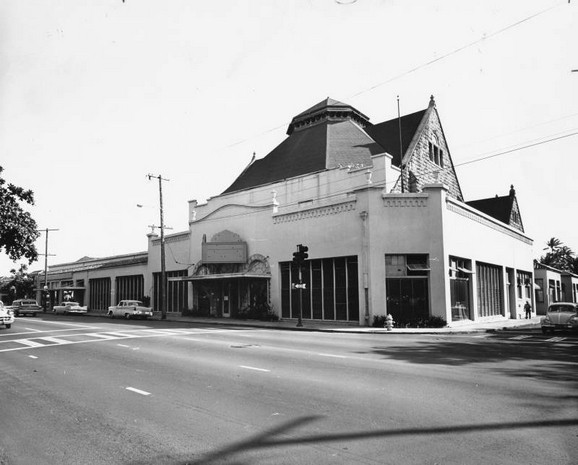
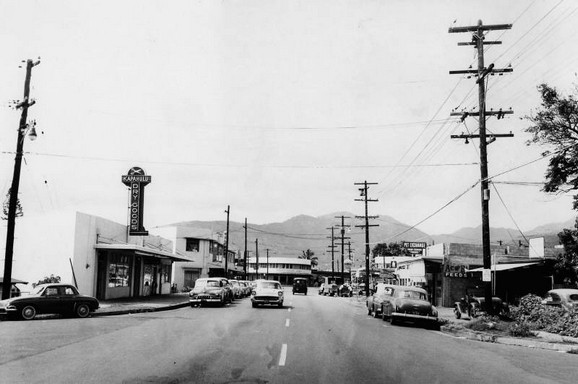
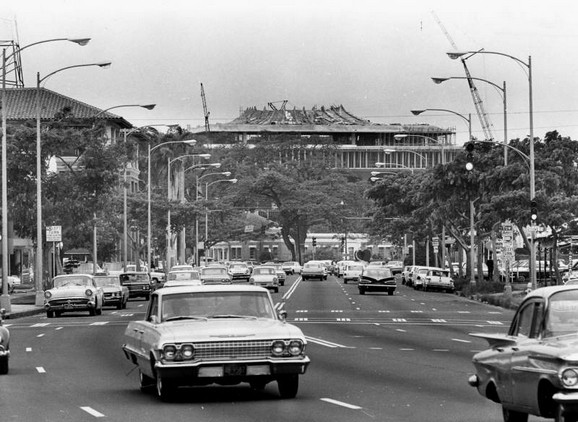
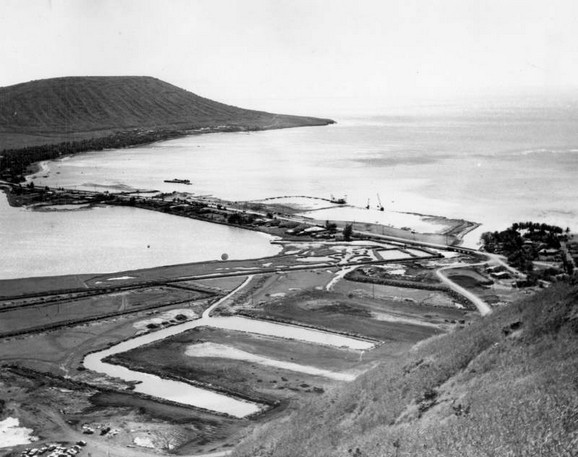
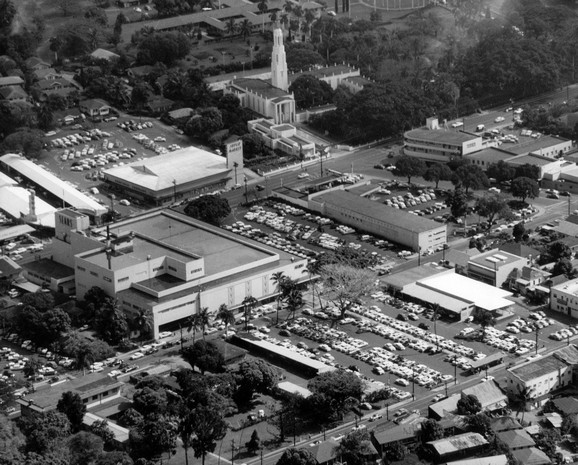
Black and white photos from Honolulu, Hawaii of the past

I transferred these from an email I received today. I don’t have the “warm” memories (too young) but I’m in awe of the way things have changed here in Honolulu, Hawaii, in such a short time (the oldest picture here is less then 70 years old). Absolutely amazing and one of the things I don’t want to forget. Thank you Susan Sumida (whoever you may be) for sharing these wonderful photos.

Great pictures of the past……some warm memories!

Trader Vic’s at the corner of Ward Ave. and King Street. It is now the location of the Honolulu Club and the now closed TGIF restaurant.

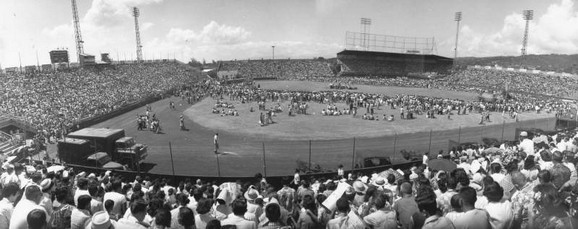
Statehood celebration at the old Honolulu Stadium. March 13, 1959.

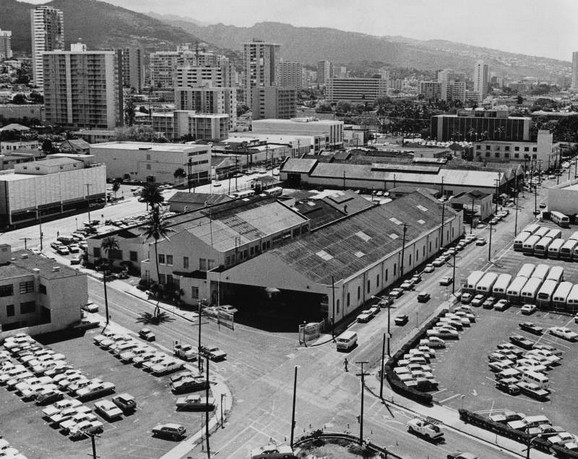
HRT bus barn on the corner of Alapai and Hotel streets in the 70’s. The Honolulu Police Dept. is now this corner.

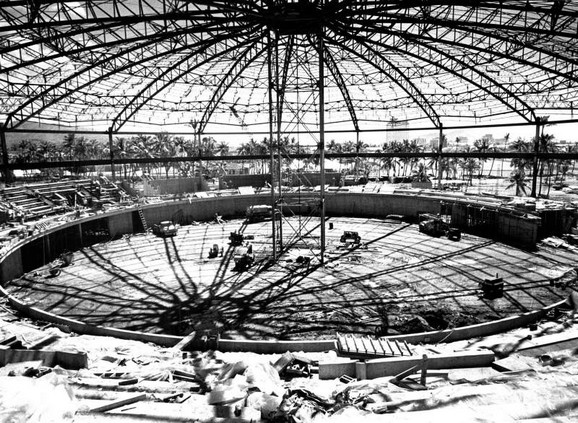
The HIC later renamed the Neal Blaisdell Center is under construction in 1963.

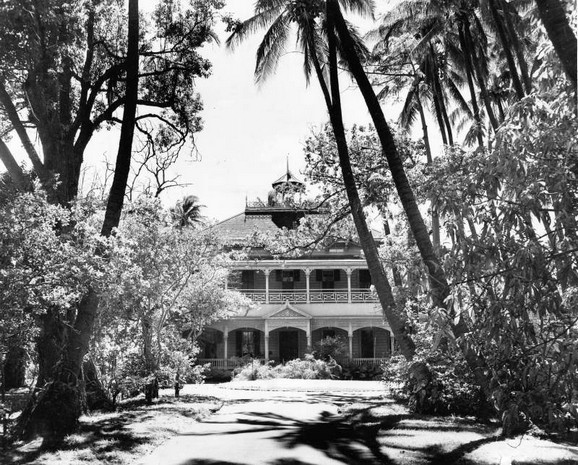
1957 photo of the Ward estate. The entire estate was demolished in 1959 to make room for the Concert Hall, Exhibition Hall and the Blaisdell Center. It covered the entire block of Ward Ave., King St., and Kapiolani Blvd.

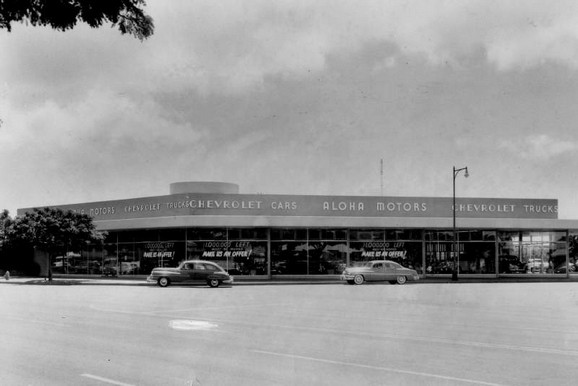
Aloha Motors at the corner of Kapiolani Blvd. and Atkinson Drive is now the site of the Hawaii Conventon Center.

Corner of Beretania and Richards Streets where the Schuman Carriage building and a doctor’s office was located in the 1950’s and 1960’s. The entire block was torn down to build the State Capitol Building. This photo was taken across the street near Washington Place.

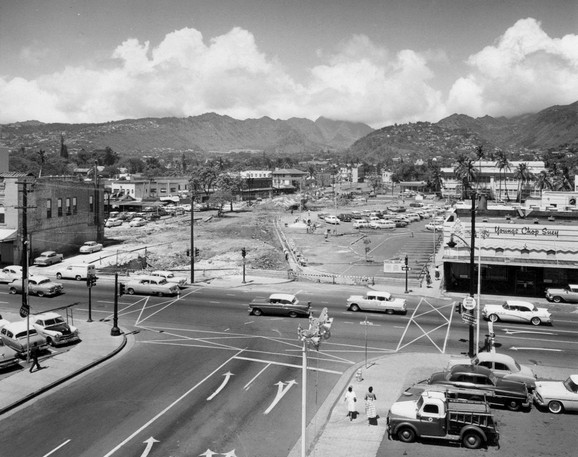
Kapahulu Avenue in March 1959.

State Capitol under construction in the background. Photo taken on Kapiolani Blvd. and Drier St. The Advertiser Building is on the left. March 27, 1967.

Fort Street looking mauka (mountain-view) from King street. Nov. 8th 1959. Today Fort Street is a pedestrian mall.

Hawaii Kai in a 1960 photo as Henry Kaiser was beginning development of the area.

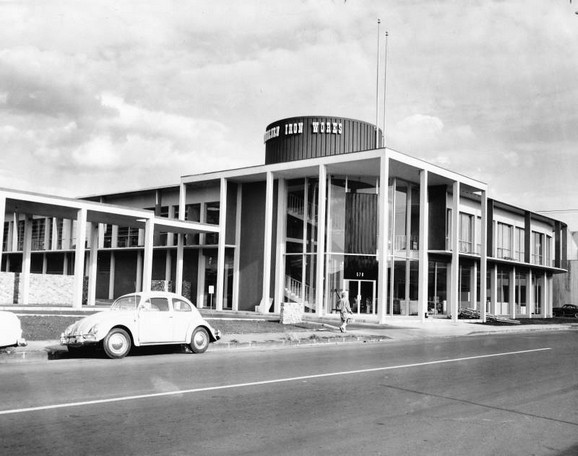
Honolulu Iron Works 1960. Today it is the location of Restaurant Row.

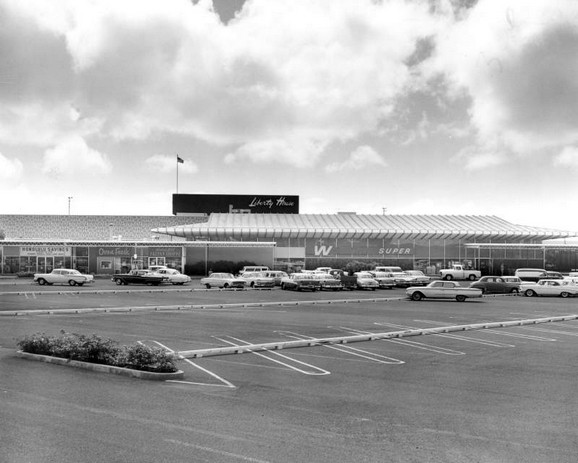
Waialae Shopping Center, which eventually became Kahala Mall, was celebrating its third anniversary when this photo was taken in 1961.

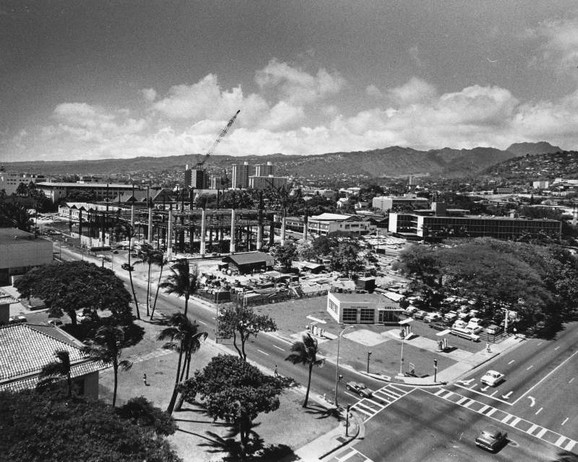
Construction of the State Capitol building July 5, 1966. Punchbowl and Hotel Street corner is at the bottom right. Hotel Street is now the pedestrian walkway between the Capitol Building and Iolani Palace .

Bishop Street, looking mauka toward Beretania Street in this 1959 photo. The street eventually continued to Vineyard and Pali Hwy. Bishop St. became one-way makai bound. Across Beretania now stands the Capitol Place building.

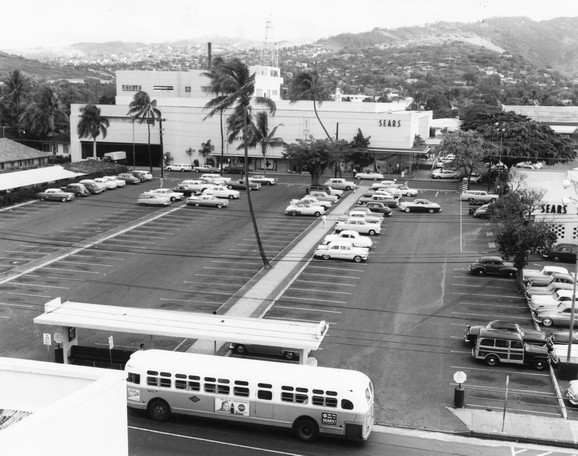
1959 photo of the old Sears and Roebuck building, which eventually became the headquarters for the Honolulu Police Department and then a high-rise condominium.

March 19, 1959 photo of the old Sears and Roebuck building and parking lot on Beretania, Young and King Streets and later, in 1967, it was converted into the Honolulu Police Department. That building was also eventually torn down and a high-rise condominium is now at that location. The parking lot in the foreground is today the Pawaa Neighborhood Park .

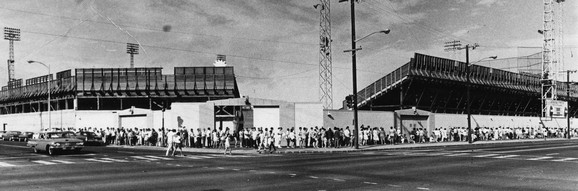
1970 photo of baseball fans line up on King Street and Isenberg at the Honolulu Stadium box office to purchase playoff tickets.

The annual Thanksgiving Day high school football championship game at the Old Honolulu Stadium on Isenberg and King Street in 1963. Today this is the site of the Honolulu Stadium State Rec. Area or as many call it, the Old Stadium Park .

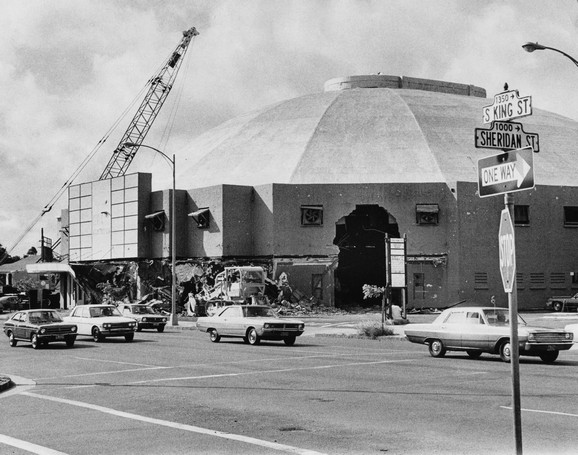
The old Civic Auditorium at 1314 S. King St. being torn down to make way for progress, in April, 1974. Built in January 1933, it hosted many functions through the years.

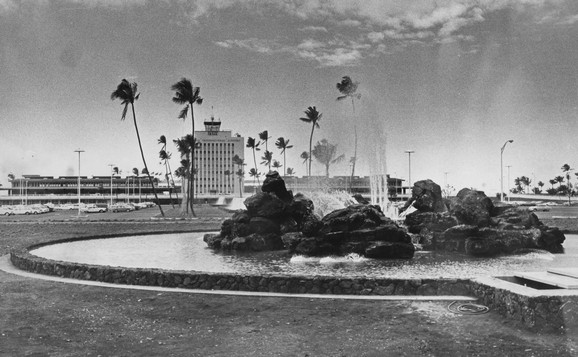
The water fountain at the entrance to the Honolulu airport in the 1960’s. At night the water fountain was lit up with orange colored lights, it looked like a volcano eruption.

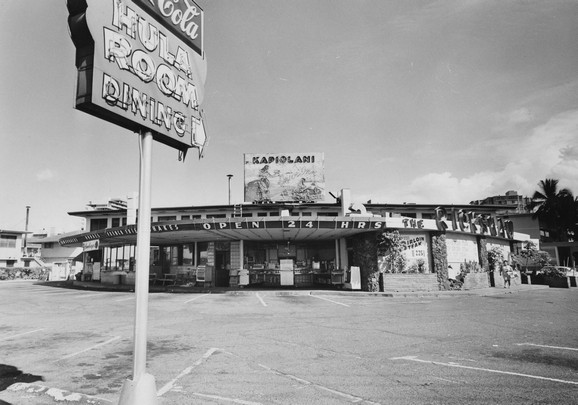
Kapiolani Drive Inn on the corner of Ala Moana and Ena Rd in July, 1968. A popular hangout in the 50’s and 60’s it was demolished in late 1960 to make way for the Wailana condominium.

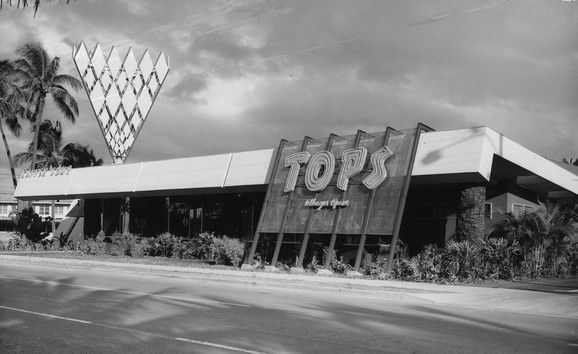
Tops Coffee Shop in 1956, on Ala Moana across Ft. DeRussy.

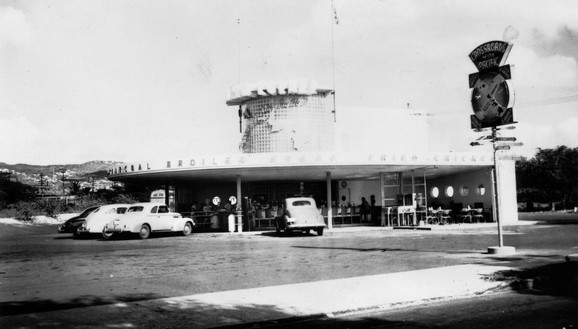
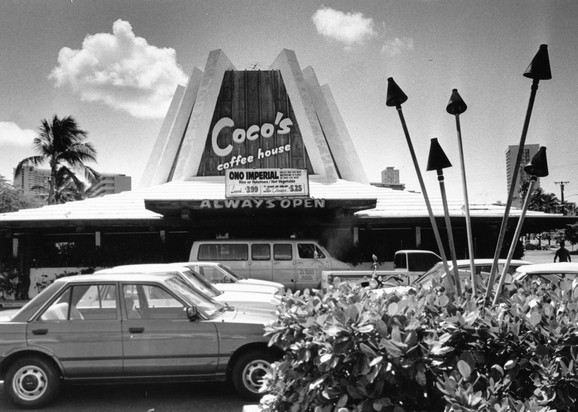
The Kau Kau Korner on the corner of Kapiolani and Kalakaua in the 1940’s. The business was torn down in 1960 and replaced with Coco ‘s Coffee House, which was torn down in 1986 to make way for The Hard Rock Cafe which is currently on that location (HRC will soon be moved into Waikiki – updated March 2010).

The last day of Coco’s Coffee House, Aug. 31, 1986. After 26 years of business on the corner of Kapiolani and Kalakaua, it made way for a new business, The Hard Rock Cafe. Before Coco ‘s, The Kau Kau Korner was in that location.

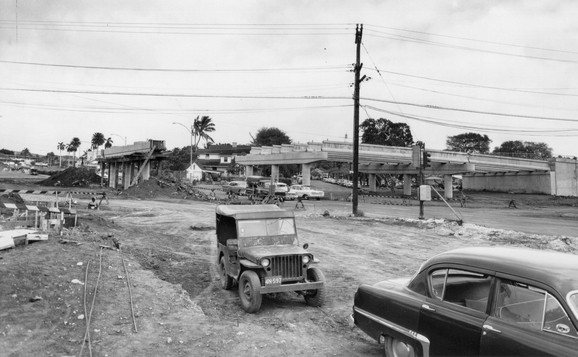
Construction of the Keeaumoku Street overpass on April 14, 1960 looking towards the Diamond Head direction and from right to left, makai to mauka.
————————————————————————

(Courtesy of Susan Sumida, time-traveler and collector of vintage photographs)– 🙂 !

Not having a coach, is it possible

Before I would have said that it is possible with no need to explain. But now I think I need to elaborate, the people have to trust each other for this to work and have a common goal. When people are forced to interact and work with each other that’s harder to accomplish.
People get different things out of improv, I get that. It can range from wanting to be a star to just wanting to have fun on stage. But where does that leave the people that just want to be good at it?

Problem with not having a plan and winging it

Okay, let me first preface this with the thought that we don’t have a leader in this group. Our group was created with the intention to perform the Fishbone and no other reason. So that being the case, we have no director or coach. What does this mean? We are rehearsing strictly with the idea that the tools and skills we learn in rehearsals will be used to do this form.
Positive – our form has a very simple idea at it’s core for us to follow (we follow the cause and effect of something from one scene directly into another and explore how it affects those new people and their relationships) which makes it easier to incorporate the skills and tools into it and see if it works.
Negative – because we have no coach it becomes a problem of what our focus is supposed to be and when that’s forgotten it takes a herculean effort to get back on track.
Problem – we have rehearsals and when things have been less structured, things have veered off course and sometimes things get personal (never good).
Opinion – I am of the opinion, if we have no coach, we need to have a group focus (much like with what we have to do in a group scene.) Without this group focus, people will do and say whatever they want in the name of change for creativity and growth. Which is a bad joke.

PBB Rehearsal 03Mar10 – Group feedback can work

On the agenda tonight were work the intro of the Fishbone, relationship scenes and silent scenes. Silent scenes were put on the back burner till next week. We worked on the relationship scenes because it proved to be better at making us focus on, what we as individuals, needed to do and our weaknesses that affect our growing in our onstage relationships. Again, the nemeses proved to be our common ones of planning, and as a really close offshoot, inventing a past that didn’t add to our “now” relationship but created a “let’s talk about what happened in our past to make our relationship right now.” What I will call “past planning.”

We did a spin on what we had worked on at the last rehearsal and it went pretty well, we definitely added a new element of giving feedback. It was good. Why did it work though? I think that when we work a lot with a group of people there comes a time where we need to start being honest with how we feel and what we need. Like all good relationships trust is built through healthy communication and a solid foundation. Improv is the same. It could easily be abused but with the intentions being to help each other excel, we grow as a group and individuals.

Common things people needed to work on to further the relationships.
Accepting the offer
Past and pre-planning
Eye contact
Listening
Adding the “and” to the Yes (giving)
Who, what, where (establishing it in the beginning)

Peas, Branes, Burritos Rehearsal 24Feb10

7 strong last night. We concentrated mainly on our relationships. Most of the scenes involved two people up, sitting in chairs and focusing on relationships.
1st series of scenes – were basic two-person scenes where the people sitting would ask for a suggestion and try to find the relationship.
The first two scenes of this series demonstrated that people will often go to the past to find that information and do a lot of inventing to establish who they are to each other now. Once I recognized that, I tried to avoid it, instead focusing on what we can do presently to establish who we are to each other.
Second series of scene – spin-off of the first series. We added some rules, get the who, what, when, where out of the way as soon as you can, no arguing, and working through 1-10 in emotion by call-outs from the audience.
This one was hard for me. It really kept me in my head a lot of the time and focusing on what was happening outside of the scene. Sometimes the outside call-outs were hard to hear and then at one point I got confused on what my name was and the name I gave my partner and couldn’t figure out who they were calling out when they gave us numbers to play. It was a good game though. But in general I don’t like directed edits because I think most of the time people don’t know when to use them correctly (to enhance the relationship of the people on stage) and do it instead for their own benefit.
Third series of scenes – were nuggetting so we could really focus on listening to what the other person said. I think that this was a good intro to listening to your scene partner although most of the scenes turned out to become more comical. What I did like about it is that we got to the point of whatever we were doing REALLY FAST.

Rance Rizzutto Workshop 20Feb10

CLASS SUMMARY
Improv Rehab – Saturday February 20th (1:30pm – 4:30pm)

Every improvisor picks up a bad habit or two along their journey. Some know what theirs are and some don’t. You don’t have to know what it is to take this class, but you’ll know by the end. Based on hours of observing, performing, and coaching Rance Rizzutto has developed Improv Rehab. It will break your bad habits and focus you in strong relationships and environments…oh, and like rehab, your brain is gonna hurt a little.

RANCE RIZZUTTO has been professionally performing and teaching improv for over ten years. He got his start with ComedySportz (improv) and The 3rd Floor (sketch) in Portland, OR. After moving to Chicago in 2003 he has trained with iO Chicago and Annoyance and has performed with ComedySportz Chicago, The Beatbox, and numerous other groups, including Silent Treatment, a two-person silent improv show with his lovely fiancée Deanna. Currently he is working for Second City Theatricals for his fourth contract on NCL cruise ships. Aside from performing his other love is photography.
http://www.rancerizzutto.com
http://www.ranceinthepants.com

CLASS BREAKDOWN
This class was energizing and fun. It involved a series of loose scenes (suggestions were locations with a lot of activities people could do) and the addition of “rules” to the scenes as the class progressed.
For sake of continuity we’re going to number each series of exercises as scene sets. In each scene set different rules were added on to the players in the scene. The audience also had the task of calling out certain key words if the players on stage were not doing the rules.

1) Rule established is that you must talk continuously (no silence) and do an activity each time you speak. (Key words for the audience to yell out if the rules were not being abided were “Talk” and “Use.”)
2) Added rule you can’t use the same object more than once, each time you speak you need to use a different object (Key word is “Switch.”)
3) Added rule no talking about the object. (Key word Buzzer tone “Eeeh!”)
4) Added rule no standing in a bingo line. (Key word “Bingo.”)
5) Added rule if you say the word “You” or “I” in a relationship context (Key word “aah.”)

Edits in Improv (Basic)

What is defined as an edit is somewhat less important than the effect. Edits are better defined as “any time a person enters or exits.”
However, loosely defined, edits are any things that act on the scene from the outside in a way that changes the direction of the scene. There are edits that initiate a new scene and there are edits that help an existing scene from the outside. This is not a definitive list but more of a work in progress.

For edits to be successfully done EYE CONTACT is essential. If you want someone to stay on stage you need to make eye contact with them, if you want them to leave, do not make eye contact with them.

Edits are grouped below in subcategories that they are most similar to:

1. Basic edits (Hanamichi, sweep edit, transition edit and cross edit are essentially the same thing, in that they all start a new scene).

o Cross Edit – come on stage, walk to the opposite DS position, and start a new scene or start the new scene while crossing down stage. Someone off stage walks across the stage w/o making eye contact and the people on stage exit. People on stage exit.

o Hanamichi Edit – usually happens to DSL or DSR of stage, new person comes on stage and freezes in a pose. Two people on stage leave.

o Sweep/Curtain Edit – someone off stage comes on stage and mimes wiping the stage clean. The action of drawing a curtain is also popular.

o Transition Edit – (Game time) Person enters from off stage and takes Center Stage
Activity – the machine would be an example of this
Song

2. French Edits (Stalker, push, pull and slacker are all variations).

o French Edit (R.’s definition) – In classic French drama, any time a character enters or exits, it’s considered the start of a new scene.

o Push Edit – 3rd person enters two person scene and tells one of them that they are needed offstage. Or someone calls from offstage for a character that is on stage, person leaves (the latter situation mandates that someone jump on stage pronto so the person that is on stage isn’t left alone for any length of time).

o Pull Edit – Call someone from offstage on to the stage. Usually a slacker or a push edit needs to happen to get one of the players currently on stage to go offstage.

o Slacker Edit – three people are on stage and someone finds a reason to leave of their own volition.

o Stalker Edit – usually involves someone spying at upstage center, involves miming a hiding place (in LTC USL or USR is also good). This edit doesn’t change the location. The two people on stage are talking – person upstage says a phrase or word that they have spoken, says it out loud, the two people “on-stage” hear it (don’t know where it’s coming from) but take it as a cue to leave and talk privately – person hiding upstage comes out and starts a related scene from the line or word that they said while upstage.

3. Directing Edits and variations thereof are Swinging Door, Tag Out, and Split Scene (though Split Screen also may transition to a new scene).

o Directing Edit – “delivering a package and exiting” thing. You’re basically entering the scene to deliver some small piece of information and then leaving. The package isn’t the only way to do this. You could also do scene painting which involves someone off stage coming on stage and drawing attention to important aspects of the space to enhance the scene. The point of this edit is to support the scene by adding some new information that drives it forward in some way. Ideally, the players take whatever information that was delivered in the directing edit and make it very important for the scene. It’s sort of a way of saying “I recognize that this scene needs help and am going to provide them with something that will help them.”

o Traveling edit – two person scene involves another location. The two people “travel” (usually walking in a circle) to that location and someone off stage offers to be a person of that “new” locale. Usually an additional push or pull is needed when they get to the 2nd locale so it’s back to a two person scene.

o Split Scene – two people are on stage, two more people enter and start having a loosely related scene (doesn’t need to be in the same location-better if it isn’t). They alternate conversations between the two couples.

o Swinging Door – two people are on stage, one person enters and “swings” the person in the center to them and has a related scene with that person, the person on the other side, doesn’t leave but waits and “swings” the other person back to them to talk to. Person that initiates the swinging door (3rd person) usually is responsible for ending the swinging door and leaving.

o Time edit – Flash Forward or Flash Back. This is a directed edit. Someone off stage says “Flash forward or flash back to (a specific time)” and the people on stage do so.

o Tag Out – come on stage and tag someone out to leave and continues the scene.

THANK YOU TO R. KEVIN FOR THE INPUT ON THE EDITS PUT FORTH HERE. (STILL WAITING FOR HIS BOOK THOUGH.)

What it means to be good at something

I am a fan of Peyton Manning of the Indianapolis Colts and am ecstatic that they’ve been able to make it to the Superbowl for the 2nd time in 4 years. For the record, I’m not thinking that I’m the best or most hard-core fan in the U.S., I only started watching them regularly in the past 5 years.
That happened because I was trying to be a good wife. You see, I was trying to meet my husband half way by watching the football games my husband watched, although I was very specific – we could only watch the games that his team was playing. He is a long-time football fan so this was my attempt at compromise. But one day (about 8 years ago) while we were watching his team play, I saw the quarterback of the other team stop at the line of scrimmage, start gesticulating, and made the people on his side move around. Which pretty much amounted to me saying, “Who’s that guy waving his hands around, he looks like he’s doing something.”
My husband then told me that, “That is Peyton Manning, he’s the quarterback.” and that he was really good. I then told him that I like him and I’ll watch him because he’s doing something. That turned into (8 years later), my husband being able to watch more than one football team on tv and radio, me knowing a little bit more about the football game, a respect for what everyone on the Colt’s team does that makes them such a good team, and sometimes even being able to tell that people are moving on both sides of the ball. Yep still not the best fan.
However, I have also been listening to the Indy (The Fan) radio, Kravitz and Eddie, and between the moments of Colts news, sometimes they say some things that have much more weight. One broadcast that touched a cord dealt with a focus on what is really important about being exceptional in something. It doesn’t matter if you receive fame or fortune from it. If someone is exceptional at something it is because of who that person is. Which translates in my mind into, it doesn’t matter if you do it for free, pay for it, get paid doing it, or even do it for the attention, people that excel at pretty much anything don’t see themselves as better or worse, they are looking at themselves and what they can do to better themselves so they continue to grow and that is what makes a person stand out in a crowd, on the stage, or even on the line of scrimmage – to someone with little or no idea of what is going on out there. And that is what makes a person truly exceptional.

The things I’ve learned from, of all things, “football” and the hope I have for the Colts to get another Superbowl ring! The Colts are going to Miami! Woohoo!